
The blurry line between spiritual and administrative authority in the Church
Church leaders are sustained a prophets, seers, and revelators. But they're also administrative leaders, and that's a very different thing.

In a couple weeks, at General Conference, we’ll have the chance to sustain new General Authorities. We don’t get new apostles all that often but we’ll sustain the two new members of the Quorum of the Twelve Apostles, and Dallin H. Oaks as the President of the Church (which we didn’t do last time).
For most General Authorities, we see them twice a year at General Conference. The main impact they have on us individually is the talks they give. It’s easy to think that this is their main job; traveling around, giving talks.
But in reality, they have two jobs—they’re called to be spiritual leaders, but also to run the huge, global organization that is the Church. And that complicates things.
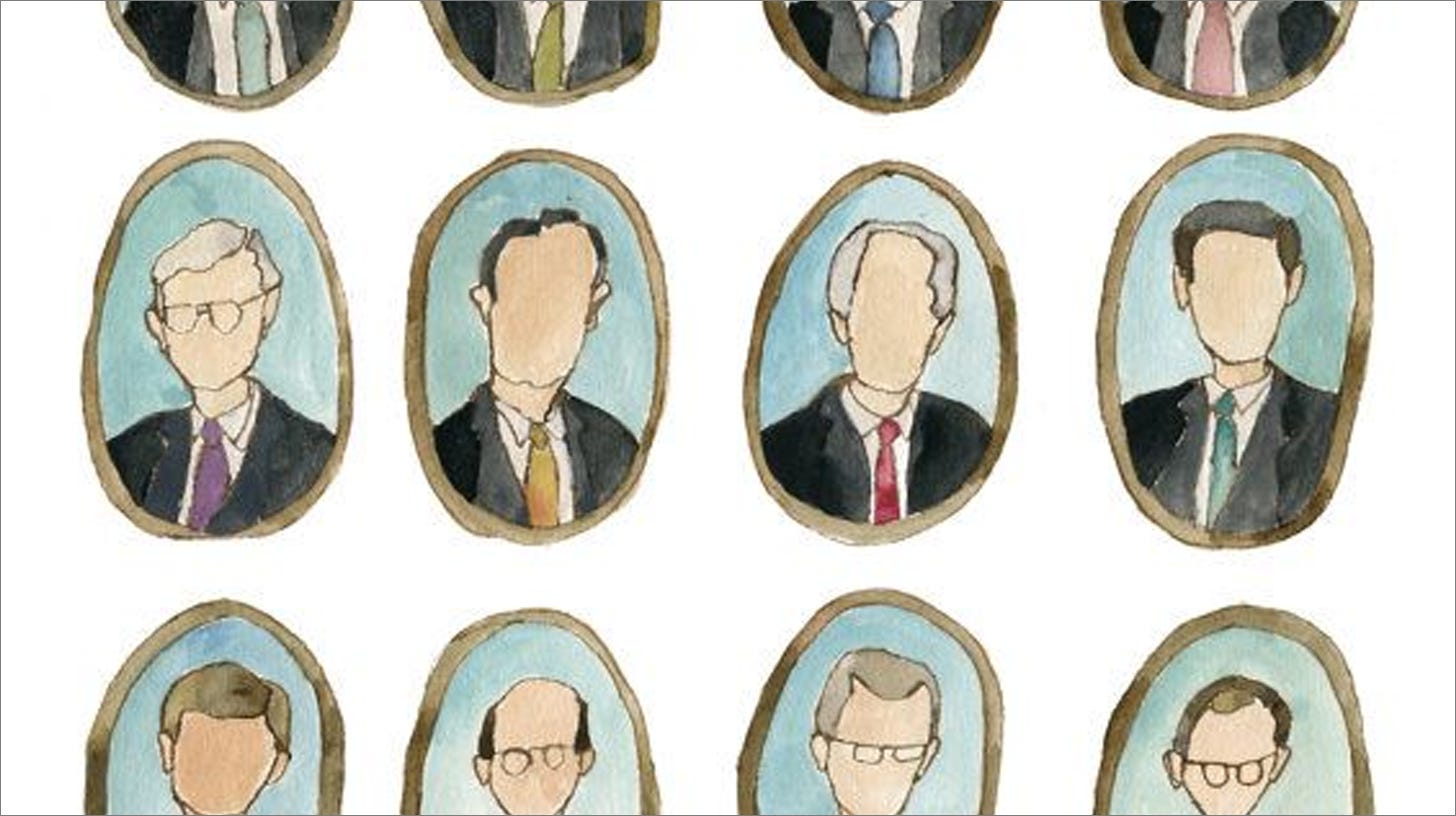
The Church has tens of thousands of employees around the world, doing all sorts of things; in addition to direct Church administration, there are things like LDS Philanthropies, Family Services, Missionary Training Centers, Family Search, Seminaries and Institutes… the list goes on and on, even including all three BYU campuses. These things all need leadership. And at the top of each thing is a General Authority, called to oversee that business or department.
That’s the rub. General Authorities are called to be spiritual leaders, for millions of Latter-day Saints around the world. And at the same time, they’re essentially called to be vice presidents in a huge corporation.
It’s possible that the Lord calls General Authorities for their ability to run the Church organization as much as their ability to inspire. Especially as the Church has grown over the last century or two, I assume the profile of General Authorities has shifted toward strong administrators and business leaders. It’s not to say they aren’t effective prophets and priests—they can be both.
It sounds weird to say that maybe the General Authorities don’t impact us as much as we might think. But much of that administrative work in the Church is abstract to us, as rank-and-file members. They’re attending meetings, managing budgets, and making organizational decisions. This is what apostles and General Authority seventies are doing every day. Doing that kind of work, I’m not sure that Elder Cook affected me today. Elder Soares didn’t impact the way I went about my Thursday.
Your experience might be the same, or it might be the opposite. I’m aware that my privilege—as a straight white male—inoculates me against harmful policies that marginalized groups in the Church have experienced. These can impact the Church and its culture for generations. And certainly, a man called into the highest leadership positions will be on track to potentially become the President of the Church someday, which could have even further-reaching effects. The things that don’t impact me individually can impact my fellow children of God deeply.
At the ward and stake level, there is a certain pragmatism that goes into deciding who callings should be extended to. From my experience, the bishopric is looking at who’s available, who’s been in a different calling for a long time and is “due” to be released, who they know might be a good fit for the calling, whose job or family situation might allow for the calling… and inspiration on who it should be. Inspiration is part of the puzzle, but it’s not the only factor.
I have to assume that some level of that same pragmatism plays into calling people into senior leadership positions in the Church, including the Quorum of the Twelve Apostles. When talking about choosing his counselors in the first presidency, President Russell M. Nelson said that “good inspiration is based upon good information.” Sometimes that “good information” has a lot to do with who is already connected to Church leaders in meaningful ways.
A variety of analyses over the years1 suggest that certain factors correlate with calls to the Twelve.
The strongest is undoubtedly family connections. It makes sense early in this dispensation, when there just weren’t that many members of the church; Joseph Smith extended callings to many of his own family members to be leaders in the Church, including his brother William as one of the first twelve apostles. While it’s less common now, President Henry B. Eyring is the nephew of President Spencer W. Kimball, and both Elders Gerrit W. Gong and Dale G. Renlund had father-in-laws that were General Authority Seventies.
Another is through the Church Educational System. President Oaks and the late Elder Jeffrey R. Holland were both president of BYU. President Eyring was the president of Ricks College and the CES Commissioner—and new Elder Clark G. Gilbert was both of those things, too, with Ricks College having become BYU-Idaho. Elder Gong also worked as an assistant to the president of BYU.
It’s also not exactly a secret that General Authorities tend to be incredibly accomplished in white-collar careers. President Oaks and Elders Christofferson and Cook have backgrounds in law. We’ve just mentioned those who were in academia. Elders Cook, Rasband, Stevenson, and Gilbert have held President, CEO, or COO titles in corporations.
There are other connections, too. Elders Quentin L. Cook and Jeffrey R. Holland were mission companions. Elder Ronald A. Rasband had President James E. Faust as his stake president for 14 years. And geography matters; Presidents Oaks and Eyring, and Elders Christofferson, Renlund, Rasband, and Cook are from Utah or grew up there.
None of this is to say that callings aren’t inspired, or that God’s hand isn’t involved.
In recent decades, it’s been popular to say that a certain prophet was called at a certain time so they could apply expertise from their career, prior to becoming a full-time General Authority. We said this about President Gordon B. Hinckley, who had a background in public relations and led the Church during the 2002 Winter Olympics in Salt Lake City. We said this about President Russell M. Nelson, who had a background as a physician and led us through the COVID-19 pandemic. And it’s even being said about President Dallin H. Oaks, who is a constitutional scholar in a time when the United States Constitution is at risk.
This sheds a positive light on pragmatism in Church leadership callings. In many faith traditions, entering church leadership means studying to become a priest/rabbi/pastor/imam and having that be your full-time vocation for most of your life. While General Authorities have served for decades before getting called to the Church’s highest posts, it’s generally in addition to their day job. They bring other experience to the position. Overall, that feels positive to me.
Sometimes a General Authority will get called where we disagree with them politically, don’t appreciate their personality, or question what they’ve done in the past. I’ve felt that. It’s not great. Maybe there are spiritual reasons the person was called, maybe there are pragmatic reasons—I’ve never been in a position to say.
In a couple of weeks we’ll have the opportunity to raise our hands—or not, as the case may be—to sustain President Oaks in his new role, and Elders Caussé and Gilbert as Apostles. For some Latter-day Saints, that will be easy, as these men fit into a long lineage of prophets and apostles we’ve become familiar with. For others, it won’t be so easy.
Whether or not someone sustains or supports a given General Authority isn’t a reflection of their faith. Whether or not you raise your hand isn’t a test. We’re sustaining them as spiritual leaders, but maybe even more so as administrators of the Church’s organization. Maybe you’re sustaining the position, and trusting that they’ll grow into the mantle and exhibit Christ-like love for those in the margins. Maybe you’re just hoping to not get hurt.
I’ve always raised my hand, before. It might not be as simple and automatic as it used to be. But right now it means that I’m willing to stay in the room and see what happens next.
The foundational work in this area is, without a doubt, D. Michael Quinn’s two books, The Mormon Hierarchy: Origins of Power and The Mormon Hierarchy: Extensions of Power (commentary on them here). More recent, less thorough analyses have been done by Mormonism Research Ministry, Mormon Matters, Times and Seasons, By Common Consent, and elsewhere.
I’m desperately hoping that one of the reasons for President Oaks position is that he was raised by a single mother who was a feminist. For too long women have been hurt by our leaders.
.
(Fairly certain that art is by Ashley Mae Hoiland.)